NOTE TO READERS

NOTE TO READERS: The Rome 2014 trip begins with post #30. Posts #10—29 were Rome 2013. Posts 1–9 were Florence 2011. If you'd like to be notified of new postings by email, let me know at gulliver.initiative@gmail.com

Monday, November 17, 2014

43—On Seeing Shakespeare Performed in Italiano and Other Crossings of Culture

Well, dear Readers, there are only two more postings to wind up this avventura. One will have to wait for processing until I get home on Wednesday. Thanks for following along.
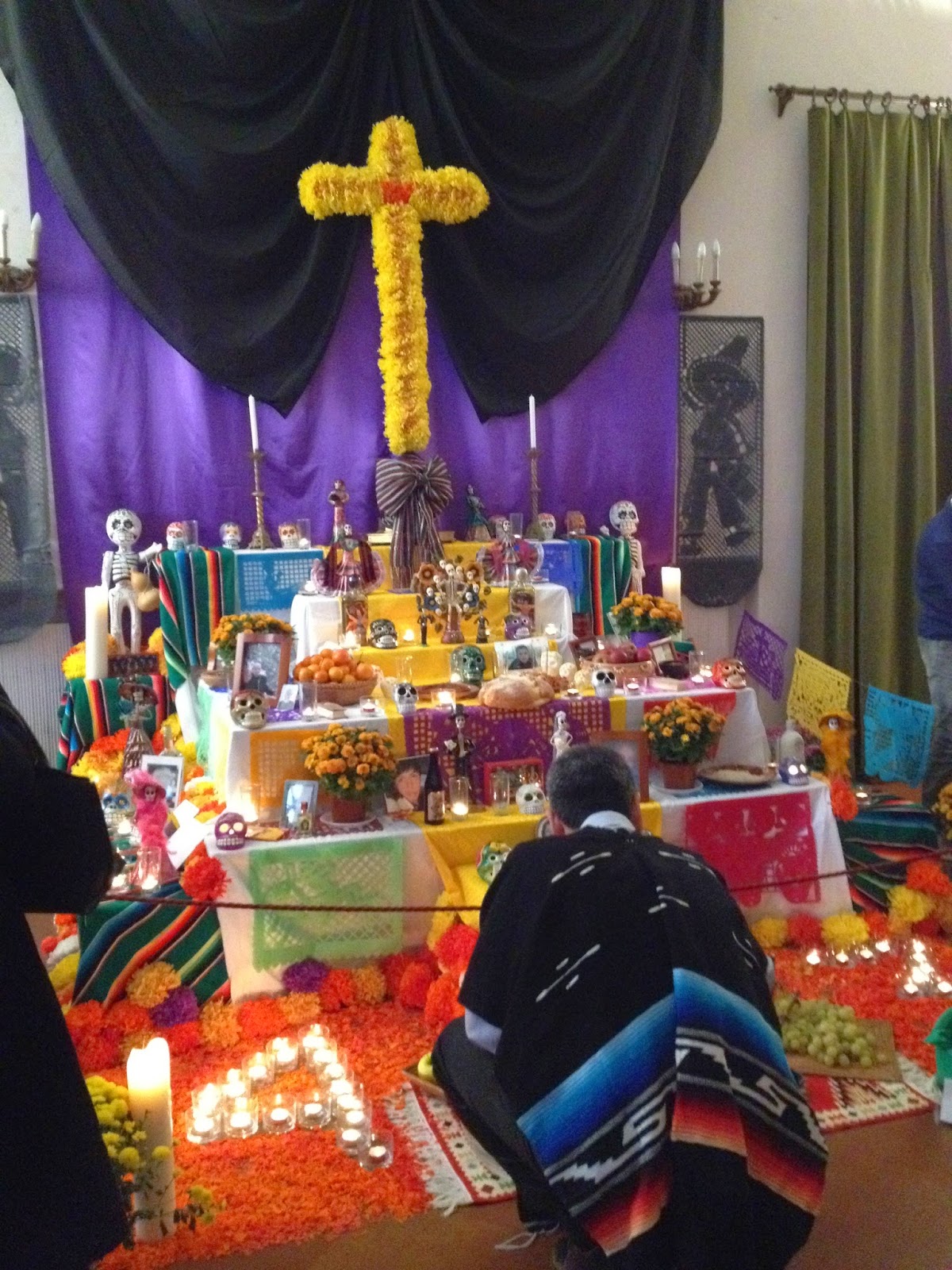
My first full day in Rome, before the mold took hold, was All Saints Day. My explorations began when I happened on the Mexican Catholics of Rome inviting passersby to their Altar De Muertos. The Day of the Dead was originally celebrated in August but rethought to coincide here with All Saints Day. I joined them.
The Day of the Dead is celebrated in every household with an altar reverently built to commemorate those who have departed this world.  The altar is filled with symbolic items chosen to facilitate the journey of the spirit—incense to purify, sugar skulls for children to eat, flowers, candles, food and drink that the departed preferred. The ceremonies and tributes at the altar form a link of communication with the dead.

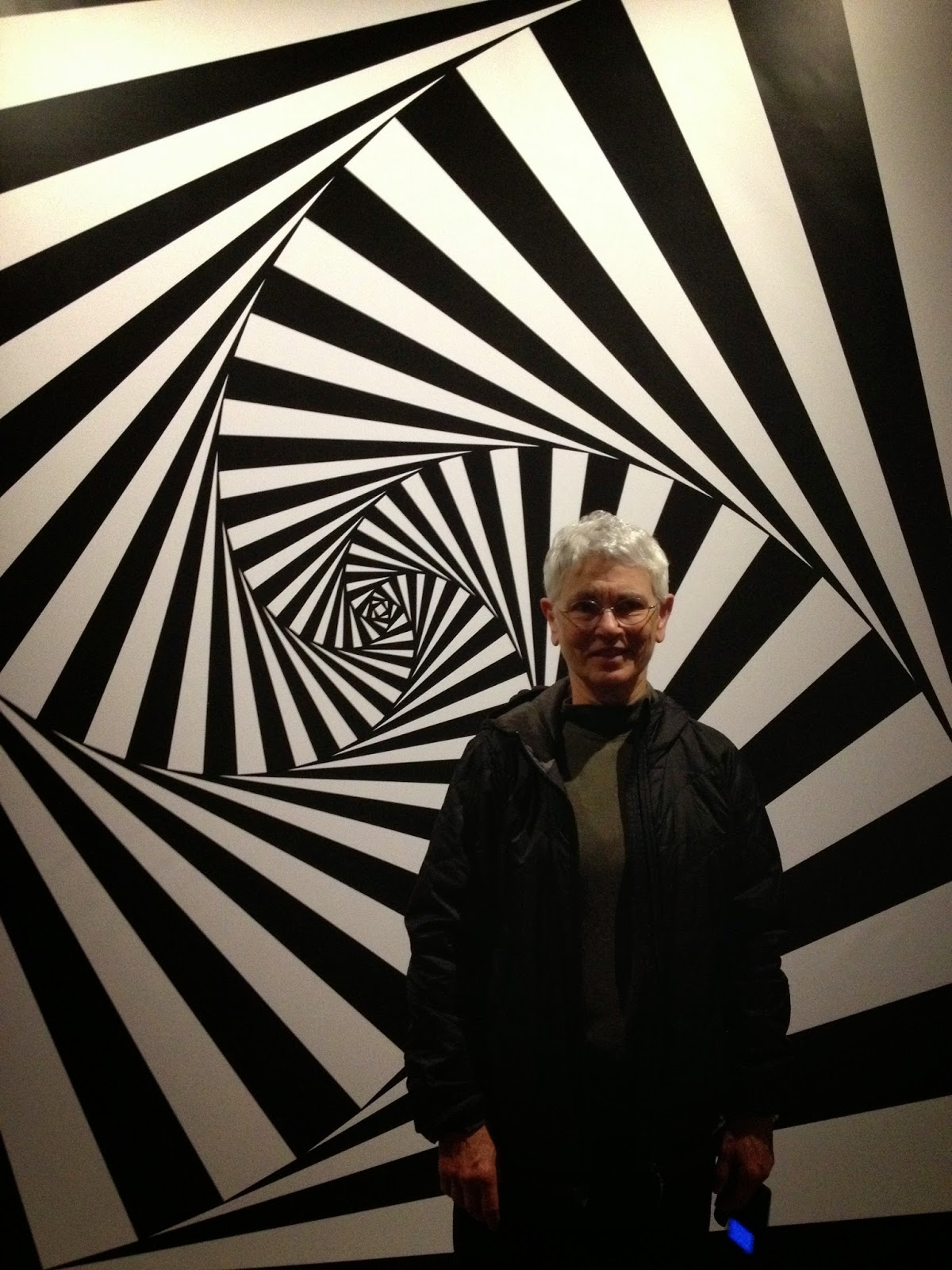
That evening, I went to a big Escher exhibit.

The day set the stage for the strangeness of the unexpected dimensions to my trip and my communication with spirits rising up from the ruins.

The trip ended for the most part yesterday at Teatro Brancaccio for a production of Riccardo III, known to English-speaking fans of Shakespeare as Richard III. And as my current quest has been full of questions, we might end with this one: Would you trade your kingdom, whatever it might be, for a horse? Riccardo would have.

But as you Shakespeare lovers know—spoiler alert—it was too late. Historical tragedy aside, if you ever have an opportunity to see The Bard performed in Italiano, do it! And pay the big bucks for a good seat. I didn't and would have been disappointed. Luckily, the audience at the early Sunday performance was scant, so some guy in a nice black suit invited all us plebeians to move up. I was in the seventh row, just left of center. Has anything like this happened in an American theater?

What with the passion of the Italian language and inherent drama in the national character, the translation and performance of Riccardo III was more opera than Shakespeare. But I believe the spirit of the thing was way more Shakespeare than what we experience in a lot of English-speaking theaters and certainly in most schools. The audience clapped, as in opera, after every great speech and scene. And there were plenty

Lorenzo Cutuli did the set.
It was stunning. And I don't just say that because he may be related to the Unruli Cutulis.
The set was a huge round charcoal cylinder—like so many of the ancient tombs here—set against black. Around the cylinder were posts, like the points of a crown.
The cylinder opened to reveal the stage, and throughout the production closed at the end of a scene, turned, and opened for the next.
Interesting lighting effects cast silvery abstract designs as Riccardo's world turned.

The actor who played Riccardo...I learned from Anna before the play...is actually a singer.
Anna had just gotten back from visiting her nephew in New York and showed me some pics on her phone of Picasso from MOMA and the Boston historical walk.
At the end, the ambitious Riccardo, for whom no murder was too much of an obstacle on his way to the throne, emerged bleeding from the heart and lamenting the death of the horse he needed to fight on to retain his power.

He then fell bloody and dead, front and center stage. The cylinder tried to close repeatedly, but kept hitting the murderous king's lifeless body which sent it wrenching and heaving. At first the audience was stunned by the gruesome scene but then went wild.

Sunday, November 16, 2014

42—Quixano Sand

After an hour at the MAXXI, Rome’s hip modern art museum, I stood on the second level and looked through a long black doorway at the ribbed metal stairs. 

But were they really stairs? 
An escalator that was out of order?
An exhibit?

I was searching for third level. I couldn’t find it
It was there on the diagram, like the promise of Heaven or the “life that will get better when you just get over the present hurdle,” but where?

The Maxxi should be called The Mobius. It’s halls are spacious, tall, and white, all connected so that you wind around beliving you’re going somewhere only to find yourself at an exhibit you’d just seen. 

So anyway, there I was at the black doorway. I’d just come down a long white curved hallway for perhaps the third Mobius time. A narrow strip of red light down the center of the ceiling flashed intermittently. I wouldn’t have guessed it. But the red light was flashing the entire story of Cervante’s epic story of Don Quixote—in Morse Code. The artist wanted us to contemplate the first Modern Man struggling against a culture of alienation.

My first reaction muttered quietly aloud was “JSOFBC” (I politely used digital-speak here…a nice used copy of Cervantes to the first person who gets it). “Just read the book F-sake.”

The present exhibit is called Open Rome, Open City.
The lobby exposition told me I was going to explore aspects of the modern city apart from itself in order to understand the whole in more depth. I should experience, participate, and think. 

I wasn’t sure how to participate with a red light. Or the sounds. The exhibit was a barrage of sounds. All loud. The lobby was nearly drowning in the dripping and bubbling water—a recording of water movement deep inside Rome’s excavation sites. 

Exhibit 1 was massive. Black. A large open earpiece like on an old telephone that narrowed and curved then opened up into an identical earpiece. You could look through but not entirely. The exposition told me this showed that in the twists and turns of life, you can’t always see your way through to the other end.       Duh.

Also in this room was a strange pounding. Loud  Unfamiliar. A recording artisans pounding on marble the way they used to pound on marble. We live, said the artist, in a world built on changing modes of creation.      No shit, Sherlock.

Next, an enormous white space. In the middle of which was a smaller square defined by four lights beaming down from the ceiling. You walk into the square and hear all the sounds of the street—traffic, talking, ambulances, music, walkers, hucksters, cafes, whatever….

Now, I understand it’s probably not enough that “Beauty is truth, truth beauty…” But it doesn’t help to be told that chaos is order, order chaos.” 
Maybe I’m old and tired. Maybe I just want too much.


Ah, possibility at the exhibit that filled two spaces with a big wall between them. The idea is that looking down the hall from the empty room, you know someone, something is there. With the zeal of the quixotic, I proceed and found: a big white space with two empty straight-backed chairs, about three feet apart, facing one another. We were supposed to participate. I sat down and waited. 
The art didn’t speak to me.


Finally! An exhibit that drew me in: A wide flight of old wooden stairs, all different colors. Real stairs. There were drums and singing from a small black speaker box. It all felt young. Primal. Alive. I believed. At the top of the stairs was a big white square floor. Empty. More colored stairs beyond. I climbed them to find a platform with a tall black speaker booming out the sound of drums. Beneath the platform, a dark hallway that led me...JFSOBC...


back to the hallway flashing Don Morse-code Quixote and that big black doorway with the ribbed metal stairs, and beside it the stair exhibit. I climbed the stairs and sat at the edge of the big white square. The exposition said this square represented places where the Occupy movements occur. The drumming and singing, the rise of The Young People. 

Wanting to be a good participatory sport, I tried letting them speak to me.
I wanted to reach out, let them grab me and pull me in. But I was drifting out of reach:

Saturday, November 15, 2014

41—The Sacred Fires of Spin

So in ancient Rome, you might be surprised to know, the center of power was not the military but the sacred fire. For all the
Setting foot on La Via Sacra,
the main street in ancient Rome,
through the Roman Forum
glories of conquest, Romans had not yet discovered the power to be had from damming great rivers, fracking, strip mining, or just blowing the tops off mountains. Fire was, therefore, a big deal. If it went out, there you were, in the dark—no matter if you lived in a hut or mammoth palazzo. The belief was that as long as the sacred fire remained burning in the great hall of Vesta, goddess of the hearth, Rome would remain standing.

The Hall of Vesta, Goddess of the Hearth
Inside the Roman Forum
So no surprise, keeping the sacred fire burning was a big deal.

What is a surprise, unless you think about it, is who was entrusted to keep the fire burning. 

The keeper of the flame wasn't some buffed up dude who trained at the 24-hour Hercules Fitness Center. 
The keepers of the sacred fire were six (the precise number is debatable) women. 

Chosen from rich families as girls when between the ages of 6 and 10, they served a thirty-year term and retired with great prestige and a healthy pension.

During their terms, they enjoyed great respect, lived in their own private quarters in the Temple of Vesta, and earned their keep by various sacred duties which included cooking up food for sacrificial occasions, as mola salsa. Recipe here included as it was used back in the day for sacrifice when not pig was handy. FYI in case you run out of pork.
Three rooms to the left, with the kitchen tucked away
to the right of the statue of Vesta by the wall.
Note, that's Caligula's pad covering the hillside.

Vestals got to ride around in their own cool carts, and traffic had to pull over to let them through. Being one of the chosen also gave them magical powers and influence. It's said they could stop a runaway slave with their thoughts. Or even intercede on the behalf of an influential person who was getting bum treatment from another influential person. 

A vestal didn’t have to take an oath as others did because her word was inviolate. So the vestals kept the wills of important people like Julius Caesar.

The catch to all this…isn’t there always one? A vestal had this job for 30 years, during which time she was not allowed to marry and had to remain chaste. To violate the rule of celibacy was treason, as they were married to the state. When the vestal was allowed to marry after her term, she was given away by the Pontifex Maximus, head of state.  


Friday, November 14, 2014

40—Walkabout Rome with Cutuli the Unruli

Welcome, groovy ones, to our Walkabout Rome.
My name is Cutuli the Unruli, and I'll be your guide.

On this Walkabout Rome, we skip the big things. So our day is especially geared for those who are travel weary and tired of paying a bunch of euros to see a lot of stuff that's falling apart.

We begin with that one and only mood setter for an unruli Walkabout: gelato. So here we are in the heart of Rome in Piazza Navona at the Tre Scalini gelato counter.

I like to start with cioccolato (rich and dark, although the one with hazelnut chips is fabuloso) and amarena (black cherry). The little cup is paper, and you get a tiny plastic spoon. Then you go out into the pizza to savor the experience. And people, do not think gelato is ice cream. Gelato is grace that is beyond amazing, remission from repentance, an invitation to believe in the glory of sensory experience beyond thought, reason, or cholesterol. Of course a cone is good. But a cup is better because the tiny spoon keeps you from behaving rashly with your tongue in public.

And do not people watch while eating gelato. Unless of course, you want to learn what those long thin poles are that hucksters are selling in every piazza. When the ideal selfie is beyond reach, do not believe it.


Do not look at the Bernini fountain and marvel at the power of the gods. You have all that the gods ever had right in your little cup. Besides, you will miss the pigeons watching the tourists from the leg of the river god.

Do look up at the far end of Piazza Navona to the rooftop of the apartment building—the setting for one part of the three-part film starring Sophia and Marcello: Ieri, Oggi, Domani...Yesterday, Today, Tomorrow.


So now enlivened by Spirit of Gelato, we leave the piazza, reminded by this sign outside a restaurant to be respectful of others and lower your voice. For us, it's not about lowering the voice but about walking about quietly. Looking for the unexpected moment not in the tour books.

Like this weird guy just sitting there watching the traffic go by.

And by the way selfies are good if you want to meet other people who are also walking about quietly. Foks like Shanti and Devi from Indonesia are always on hand to ask if you'd like them to take your picture. It's much more personable than a thin metal rod and is also free and fun!

And by the way, you will be happy to know that with their new president, Devi and Shanti are sure things will be looking up in Indonesia.

39—Moving with Color

“He moved with color,” the grief-stricken young woman said of Ivano (ee VAH noh). When she walked to the front of the beautiful Church of Santa Maria in Trastevere, the several hundred people shifted in their seats, trying to see her. They came alive, not conforming to those straight-back Catholic benches as when the priest talked. And talked. And talked. He was a gentle soul, comforting the people, as best as I could understand, with the promise that Ivano would rispose in pace nella casa di Signore blah blah blah 

I kept looking up at the exquisite frescos above the altar. But as the priest spoke, it seemed that even Gesù with his
 celestial gold robe, Mother Mary, and their entourage were glazing over, wishing the holy father with just shut the F up.

I enjoyed the sheep parading below Gesù some from the left, others from the right, all meeting the lamb with the halo in the center.

I hadn’t expected to attend a funeral today. But I walked across the Tiber for some of the fabulous zabione gelato I got there last time. Like everything else I had expected of the trip, they didn’t have any. So I got blueberry and chocolate with cream and bits of hazelnuts. 

So then off I went with my sweet little cup and tiny plastic spoon to the piazza of Santa Maria in Trastevere to sit on the steps of the famous fountain and soak in the sun. Oh, for godsake, can you believe it: the fountain was running over, down the steps, which were all wet and black with muffa…OMG. 

So I leaned against a potted tree and began watching the tour group in front of the church. Then a green car arrived with men in black suits whose demeanor was unmistakable—Morticians. And, behind another potted plant, the hearse. 

There’s a statue of St. Anthony inside the church that I love. I thought if I wanted to see it, I better go in. By the door was a table with a book to sign in memory of Ivano. I wondered who he was. Inside the church, Istarted toward St. Anthony when I heard enormous clapping for Ivano as six men more him in a box toward me.

Deferring to the deceased, I stood aside. And then it was in watching the mourners, I decided to stay. Let me put it to you this way, I saw only one fashion scarf in the crowd. An orange one worn by a big rumpled man, maybe fortyish, with with black hair and the face of a cherub. Orange, shall we say, is definitely not a fashion scarf.  

But the man was weeping, and I thought later he and Ivano must have moved together in color. Another man, younger, twenties perhaps, was inconsolable. Wearing rimless glasses, a green parka, jeans, and black high-top tennis shoes, he looked like someone who might be cast as the intellectual in a Checkov play.

No one was dressed up. We were in one of the most beautiful and cathedrals in Rome, and it could have been Netarts. There were: tthree women with the dye jobs, maybe worked in the place where Ivano got his hair cut. Old men in faded jeans, plaid shirts hanging down below their blue thermal vests. Little kids. Teens with hip but not expensive clothes. Two butch young women. Grandmothers helped in by their sons. No one was dressed for mourning or church, but for what we would call their blue-collar jobs. Their grief was not over the top. It was deep. Profound. Three hundred mourners or more.

The inconsolable young man spoke, his short talk flooded with emotion and the words sempre, tante, tutto: always, many all. When he finished, everyone applauded—not polite clapping but cheering with hands and heart.

38—How Are the Markets Doing?

The Foro Romano or Roman Forum is one of the top tourist attractions in the world.
Foro Romano: What's left of the market square
At it's center was the market, sort of an outdoor Saturday market kind of arrangement, except it was not limited to Saturday. And the forum must have a happenin’ place in mid March 44 B.C. when, following Caesar’s assassination, Mark Antony brought the bloody corpse there for all to see and reflect upon. It’s interesting beyond all the dramatic portrayals of the conspiracy to imagine what you would have thought. 

We all remember what we were doing when Kennedy was shot or the Towers fell. The Romans of that day undoubtedly remembered where they were when Caesar got stabbed. Without Lupo Blitzeri to give a blow-by-blow analysis of unfolding events, people must have gathered together trying to get the latest. 

But imagine yourself standing there with the wine and grain you just bought when Mark Antony arrives with Caesar’s corpse for all to see, bloody with the multiple stabbings. He then leaps to speaker’s platform just past the market square and reveals to the crowd that the leader who had appeared such a threat to the people by accepting the role of dictator had willed his fortune to the people. 

Ooops. 

I eavesdropped on a stylin’ middle-aged guide telling the story—an American woman with a hearty mezzosoprano voice and a gift for punching up the Shakespeare’s tragedy into a CNN-type report with the oops ending.
A slender dark-haired Italian guide draped with her fashion scarf and striding along in leather boots with those lethal toe points mentioned the assassination of "Caesar, the dictator" and moved on.

In the end, Caesar’s greatest gift to Rome was probably his chosen heir—Octavian aka Caesar Augustus, who only nineteen at his ascension would, over the next 41 years lead Rome from Republic to Empire. But also during his reign, he became an architect of peace with his famous Pax Roma. I visited the Ara Pacis museum where there is a replica with bits of the temple he built to the goddess of peace.

Ara Pacis
It must have been a stunning sight. All marble and peaceful, small compared to the majorly huge everything in Rome. And no statue of the goddess. You walk into the replica of the Ara Pacis (Ahra Pah-chees) and it’s quiet, as it must have been in Augustus’ day. The friezes inside and out are of fruits and flowers and people and figures representing peace and prosperity. There’s a narrow walk around a large marble altar. There is inside a presence. Perhaps like whatever it is that I believe exists in most people but remains unexpressed as we bustle about our many markets and fight our wars, both personal and national: an understanding that stuff and guns are not the way.

In front of the temple was an obelisk designed to tell people the time and day by the sun. On September 23, Augustus’ birthday, the obelisk cast a shadow from itself into the entrance. I like to imagine what the discussions with his design team might have been like.

Wednesday, November 12, 2014

37—Muffa and the Bear

Would it kill them to put up a few damned street signs? But I’m getting ahead of myself. 

Today was my first visit to the Aventine. The Aventine, being one of the seven hills of Rome. The decision on the route was made in a narrow back street when I realized it wasn’t a shortcut, with the three of us putting our heads together over my street map—me, a woman in a fuchia jacket and white helmet straddling a white motorcycle, and a wafer-thin woman in shades of gray smoking one of those Italian cigarettes that smell like Nero’s cenari (remember the ashes that gave way to the trees filled with devils masquerading as crows?). 

Anyway, it was decided that il più facile (easiest) way to the Aventine was to head over to the old Roman Forum, turn right at the Colosseo, then walk along the Palatine Hill….now a hill of ruins but back in the day, home to all rich—Palatine, hence the words palazzo and palace. Caligula had a pad on the Palatine. 

Attraversing the street at the end of the Palatine, I’d walk past the old starting gates of the Circus Maximus, il Circo

Massimo. Remember all those chariot races? Well, this is there they took place, the red, green, blue, and white teams duking it out to the delight of the 250,000 people the stadium could hold. Michigan Wolverines—with il più grande stadio in the U.S. at a mere 109,901—eat your hearts out. Today, however things were quiet at the Circo, only a few workmen doing whatever.

Lots of restoration going on around town. You might have seen the story on 60 Minutes about how some wealthy Italian citizens are pitching in to tidy up the ruins. Crews are cleaning the Colosseum with small brushes and all manner of machines. The scaffolding is impressive—as is the before and after effect.

And as I was walking, I began to notice people moving about confidently, with purpose. Why am I not one of these people:

People rushing to work in the midst of 2000 year-old ruins, completely unconcerned about the effects of empire on their lives. Street vendors hopping on the hip new thing, selling thin metal arm extensions for selfies. Some guys in orange suits way up high over the road in white cherry pickers, trimming those famous Pines of Rome, also known as umbrella pines. The chain saws were buzzing, branches getting ground up, big rounds of wood getting carted off. Ah, the sights and sounds of Oregon. And the 4.5 million tourists who come to to the ruins  each year with their guide books and people they love sitting at cafes unafraid of their food. The guides followed by their happy little groups, the two connected with blue headphones through which the guide directed them to look—no road signs required.
Pines of Rome and Rush Hour


Imagine what the grand opening in 80 A.D. must have been like with fifty to eighty thousand people filing in all the doors. And the crowds undoubtedly went wild as over 9,000 wild animals were killed in the inaugural games. 
But then my mind turned to my map. I was going to a doctor. And I was walking as a kind of test. I'd experienced the relief from the cold after three days. However, I was not well. Difficulty in breathing would come and go. Very strange. I would feel better outside but not in. I was walking the hour and a half to see how I would be.

Reading a detailed street map of Rome is like looking into your plate of spaghetti. There are less complicated versions that are not always helpful because you get lost in the complexities between the obvious.

But the real problem is that streets are not always clearly marked, sometimes not marked at all. Confusion always seems to distract me. So now in need of help, I was noticing the business men. Two at the corner of the Circo Massimo and the Aventine put me the direction of la statua di Garibaldi…and then it was just one sinestra turn followed by a destra turn, and i would be at il dottore.